


From The Reporter: https://tinyurl.com/4emxhxdh
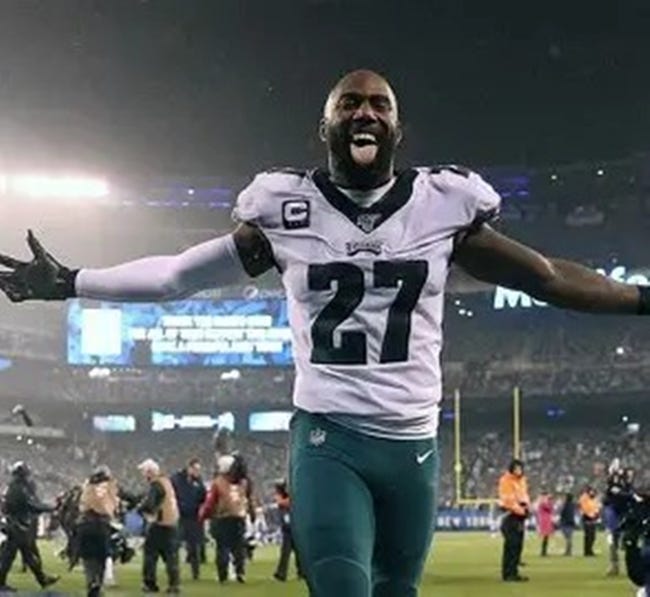
PHILADELPHIA — Malcolm Jenkins is beloved in two cities. He helped lead two franchises to their first Super Bowl titles.
First in the 2009-10 season with New Orleans (the city where the Eagles won their last one), and then with Philadelphia in 2017-18, when he helped the Eagles make history.
Jenkins never chased applause, but it found him anyway. The former safety, community leader and two-time Super Bowl champion was inducted into the Eagles Hall of Fame at halftime Friday, a fitting honor for a player whose impact in Philadelphia went far beyond the stat sheet.
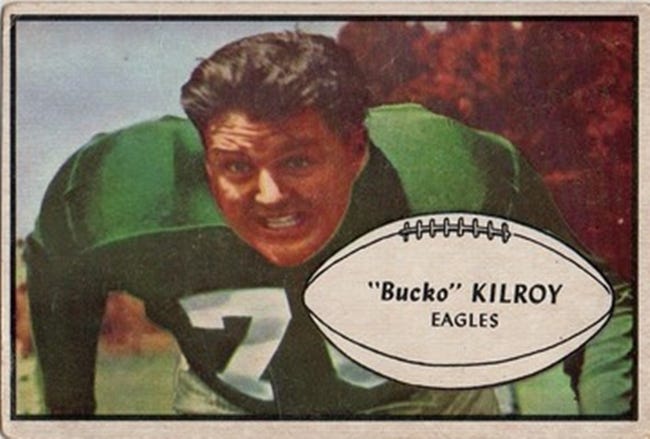
He joined the legendarily intimidating two-way lineman Bucko Kilroy, who was posthumously inducted. Kilroy, who was born in Port Richmond and attended Northeast Catholic and Temple University, played for the Birds for 13 years and was instrumental in their 1948 and 1949 NFL championships.
Jenkins, who was here from 2014-2019, is the first Eagle from the 2017 team to be inducted.
“I didn’t even realize that at first, when I first got the call,” Jenkins said. “To be recognized as the first Eagle from that Super Bowl team to go into the Hall of fame is not something (that I take lightly). That team meant so much to this city. There were so many leaders and players on that team that contributed.
“It’s a huge, huge honor, and it’s extremely humbling.”
Drafted by the New Orleans Saints out of Ohio State in 2009, Jenkins arrived in Philadelphia in 2014 as a free-agent signing who was expected to stabilize a struggling secondary. He did far more. Jenkins, a North Jersey native, became the heartbeat of the Birds’ defense for six seasons, playing every snap with uncommon range, toughness and intelligence. He never missed a start in his entire tenure here.
A three-time Pro Bowl selection with the Eagles, Jenkins was the rare safety who could do everything — cover tight ends, blitz, play center field, drop into the slot and serve as the on-field general for multiple defensive coordinators.
Coaches leaned heavily on his versatility, often designing packages around his ability to disguise coverages and diagnose plays before they developed.
His defining moment in Philadelphia, of course, came during the 2017 season. Jenkins captained a defense that paved the way for the franchise’s first Super Bowl championship, highlighted by a red-zone stop that helped seal a divisional-round win against Atlanta and a physical performance against New England in Super Bowl LII.
His knockout hit on Patriots wide receiver Brandin Cooks remains one of the most famous defensive plays in team history — a reminder of his closing speed and fearlessness.
Jenkins’ first apartment in Philadelphia was on Broad and Bainbridge. He used to drive down Broad Street imagining what a parade would be like.
“So it was surreal to me, years later, actually living out that parade to see and witness what it meant to the city, what it meant to this fan base, what it meant to this organization,” Jenkins said. “To share that moment with my teammates was absolutely rewarding.
“(Never) did I ever really see this moment of being inducted into the Eagles Hall of Fame, to be thought of as one of the greats amongst people that I respected and idolized as a kid. To be alongside them as peers is a huge honor — not only to me, but to every coach who’s been a part of it, every teammate who’s been a part of it, to every fan, my family, who’s been with me along the way. It’s been one hell of a journey, and I’m super excited and humbled to be honored in this way.”
Jenkins’ leadership was as essential as his production. He was the emotional center of the locker room during Doug Pederson’s tenure, guiding a veteran roster through injuries, late-season playoff pushes and the weight of championship expectations. Younger defensive backs routinely cited him as the standard for preparation and professionalism.
Off the field, Jenkins became one of the NFL’s most visible and respected voices for criminal justice reform, education equity and community investment. Through the Malcolm Jenkins Foundation, he established programs for underserved youth in Philadelphia and across the country.
In 2010, Jenkins launched his foundation to assist lives of local youths by providing resources, opportunities and experiences that would help them succeed. In 2017, he co-founded the Players Coalition, helping advance leaguewide initiatives around social justice and player engagement.
Jenkins retired after the 2021 season following a second stint in New Orleans, but his legacy in Philadelphia never faded. He finished his NFL career with 1,044 tackles, 21 interceptions (plus 590 return yards), 13.5 sacks and seven defensive touchdowns over 199 regular-season games.
Ahead of the induction, he penned a letter to fans expressing his gratitude and humility. Among whate he wrote: “You made it clear that if I was going to be considered great in this city, I had to earn it every single day. Playing here taught me that leaders don’t duck the hard questions or shy away from the challenges that arise. Champions stand up when things get loud, messy, or complicated.
“This was the standard I tried to hold throughout my years here. Not just on the field, but in the community. I know what this city stands for, and I believe Eagles players should embody those principles: grit, passion, justice, family.”
On Friday, he returned to Lincoln Financial Field not as a captain or playmaker, but as a permanent part of team history — a player whose toughness, leadership and community impact made him one of the most influential Eagles of his era.
Kilroy — a three-time Pro Bowl selection and member of the NFL 1940s All-Decade Team, who later served as an executive with several clubs — died in 2007 at age 86. Members of his family represented him during the induction ceremony.
—
Follow Christiaan DeFranco on X at @the_defranc for the latest updates.